Mostrando entradas con la etiqueta Free time. Mostrar todas las entradas

miércoles, 17 de mayo de 2017

Talking point: Playing

This week's talking point is playing. Before getting together with the members of your conversation group, go over the questions below so that ideas come to mind more easily the day you get together with your friends and you can work out vocabulary problems beforehand.

How often do you play these days?
How often did you use to play as a child?
What games do you remember from your childhood?
How do children play?
How do adults play?
What do children and adults gain from playing?
Do today’s children play differently from in the past?
Consider these areas and the photos to help you think of ideas:
physical skills – social skills – experience – knowledge
What is your attitude to online gaming?
How do you think playing online games can be useful?

Do the statements below express your attitude to play? Discuss.
‘Adults have lots of different forms of entertainment but only children really play.’
‘Everyone should play an organised sport. Playing sport is good for us –physically and mentally.’
‘Toys and games should be educational so that children learn while they are playing.’
 ‘Childhood is a time when you should play as much as possible –there’s plenty of time for work when you’re older.’


domingo, 8 de enero de 2017

Extensive listening: How to get control of your free time

There are 168 hours in each week. How do we find time for what matters most?

Time management expert Laura Vanderkam studies how busy people spend their lives, and she's discovered that many of us drastically overestimate our commitments each week, while underestimating the time we have to ourselves.

She offers a few practical strategies to help find more time for what matters to us, so we can "build the lives we want in the time we've got."

lunes, 14 de marzo de 2016

Listening test: Social free time

Listen to two friends talking about the way the spend their free time and choose the option A, B or C which best completes each sentence.


1 Harry
A goes for a swim to clear his head.
B goes for a walk regularly.
C seems to very busy these days.

2 Sandra
A is an avid reader.
B only reads fiction.
C prefers reading to listening to music.

3 Harry can’t give Sandra any advice at that moment because
A he has too much work to do.
B he is in a hurry.
C he is no expert.

4 Sandra
A enjoys being surrounded by people.
B is having a three-day weekend break.
C prefers peace and quiet for her weekend out.

5 Swanage in Dorset
A has attractive buildings.
B has very expensive hotels.
C is not exactly on the coast.

6 For her weekend break in Swanage Sandra
A is considering renting a car.
B thinks travelling by train would be too expensive.
C should allow more than three and a half hours for the journey.

7 Sandra says her boss
A allows them to do the work afterwards if they miss a few hours.
B doesn’t take things easy.
C is very strict.

Corfe Castle in Dorset. Photo: Alamy

Sandra: How do you spend your free time?
Harry: I don’t seem to get much of it these days – but when I do, I like to go to the coast and take a long walk. I find that it really clears my head. How about you?
Sandra: I prefer reading or listening to music in my spare time. I find it really relaxing.
Harry: What kind of things do you read?
Sandra: Mostly fictional novels, but sometimes I also read biographies and autobiographies. I’m never happier than when I’ve got my head in a book so I suppose you could say that I’m a bit of a bookworm.
Sandra: You know you were saying yesterday that you often go to the coast in your spare time?
Harry: Yes?
Sandra: Well, could you tell me which part of the coast you usually go to? I’m thinking of getting out of the city myself this weekend, so if you’ve got any recommendations about where to go, I’d really appreciate it.
Harry: I’m in a bit of a rush right now, but I’d be happy to tell you a bit later on.
Sandra: OK, well, maybe we could catch up after work.
Harry: OK, I know this part of England like the back of my hand so I can point you in the right direction.
Harry: You know you wanted me to recommend a good place for you to go to the coast over the weekend?
Sandra: Oh, yes, if you could, that would be great.
Harry: Well, what kind of place are you interested in? I mean, there are so many options, so if you can tell me whether you’d prefer, say, a town or a village...
Sandra: Oh, a village or a small town, definitely. I get enough of larger towns and cities in my day-to-day life and at the moment I’ve really had my fill of the hustle and bustle of London! I’m longing for a couple of days somewhere where the pace of life is gentler.
Harry: Since you’d prefer a village to a town, why don’t you try Swanage in Dorset?
Sandra: Why, what is it like?
Harry: It’s a really picturesque little place, right on the coast, with gorgeous old buildings, some very reasonably priced hotels...
Sandra: Oh, it sounds perfect! How long does it take to get there from London?
Harry: Well, that depends on how you plan to travel.
Sandra: By car, I think. I’d go by train if I were travelling alone but I’m bringing the whole family so it would work out too pricey.
Harry: Yes, if I were you I’d go by car and it will be useful for getting around when you get there.
Harry: To get to Swanage by car should take about three and a half hours tops, I’d say. Mind you, it does depend what time of day you set off.
Sandra: What time would you recommend?
Harry: Well, certainly not in the rush hour, and preferably not on a Saturday morning. If you have to leave on Friday, it would be better to leave about 3 p.m. if you can get the time off work.
Sandra: Oh, thanks for the tip - I’ll ask my boss if I can leave early.
Harry: Mine’s usually pretty flexible about our timetables as long as we make up the hours afterwards.
Sandra: I wish my boss was a bit more easy-going.

KEY:
1C 2A 3B 4C 5A 6B 7B

miércoles, 10 de junio de 2015

Talking point: Time

This week's talking point is time. Before getting together with the members of your conversation group, go over the questions below so that ideas flow more easily when you meet up with your friends and you can work out vocabulary problems beforehand.

What activities do you prefer to do with your time?

In what situations do you feel time flies?
In what situations do you feel time drags? 
What do you think you would learn on a time management course?
Would you like to do one?
Have you ever run out of time to do something?
How often do you take time off work?
When did you last feel you were wasting your time?
How important is to be punctual for you? And in your country?
Do you ever feel that there aren't just enough hours in the day?

To illustrate the point, you can watch the video How to Manage your Time Better.


miércoles, 8 de abril de 2015

Talking point: Going out

This week's talking point is going out. Before getting together with the members of your conversation group, go over the questions below, so that ideas flow more easily and you can work out vocabulary problems beforehand.
  • How often do you go to the cinema / art exhibitions / the theatre?
  • When did you last go to see a film / an exhibition / a play?
  • What kind of films / art / theatre do you like?
  • Are there any films / exhibitions / plays on at the moment that you would like to see?
  • What's on in your town or city at the moment?
  • What's nightlife in your town or city like?
  • How does it compare with the nightlife in other cities you know?
  • Have you been out anywhere recently?
  • Where did you go?
  • How was it?
  • Think about clubs, films, plays, exhibitions you think are great, overrated, moving, trendy, rubbish, weird. Tell your partners about them using the adjectives given.
To illustrate the point you can watch the Speakout video Time Out.


    What do you like doing in your free time?
    Finn: I like playing music and going to concerts in my free time. This weekend I’m going to a bar in North London to see my friend’s band. What do you like doing in your free time?
    M1: I like to keep fit. I like to be very active. I like to do a lot of sport. I also like to see a lot of friends. I like to go to the theatre. I like to go and see plays.
    W1: I like to read, books about … crime novels, for example. And I like to go running. And obviously I can’t run when I am at work. In my free time, I like to do some exercise.
    M2: I have two small children so I don’t have much free time. But seeing friends is one of my great pleasures. I have some friends, we play music together. We’re in a band.
    M3: I like coming up here to London to see galleries and theatres, and things like that. I like eating and drinking a lot. Sometimes in restaurants, and sometimes, either having friends around for that, or going to other people’s houses.
    W2: I enjoy jazz so I quite like having friends around to listen to the.. to listen to some jazz or go out to a jazz club
    W3: I like to do many things in my free time. I love to read, I love to study different things. I’m studying oil painting and different languages now.
    M4: I enjoy reading. I enjoy playing the guitar. I also enjoy creative writing - and watching films.
    Finn: What are you going to do this weekend?
    M2: This weekend, there is a large camping trip of all my son’s school friends. And we’re all going off camping, which is going to be very interesting.
    W1: This weekend I’m going to run a half marathon in Nottingham for the Robin Hood festival and raising money for a charity.
    M4: I’m going to relax as much as possible after quite a hard week, and a stressful week. So I’m going to possibly watch a film and do very little.
    W3: This weekend I’m going to try to relax a little. I just completed a long trip.
    W2: This weekend I’m going to take my son to football. He plays in a local football team.
    M3: This weekend I’m going to see some friends on Saturday night, and have dinner at their house. And then I’m going to be welcoming some friends at our house on Sunday night.
    M1: I have a friend, who … it’s her birthday. And I’m going to go to the birthday party on Saturday. And then on Sunday I’m going to go to a barbecue.

    miércoles, 18 de marzo de 2015

    Talking point: Time off

    In this week's talking point the topic is time off. Before getting together with the members of your conversation group, go over the questions below so that you can work out vocabulary problems beforehand and ideas flow more easily when you meet up with your friends.

    What are the main tourist attractions locally / regionally / nationally?
    What are they like?
    How many public holidays are there where you live?
    Do you take them all?
    What is your favourite public holiday?
    What did you do on the last public holiday?
    Do you often go out for the day if you have a day off?
    What is the best place to go for a day out in your area?
    What are the main factors to decide where to go for a good day out?
    And for choosing a holiday?
    How much holiday do you get per year?
    Is that the same for all the workers?
    Are you happy with what you get?


    F: I’ve spent a lot of time living in different countries so there isn’t one place, I think of as home. I’ve lived in Scotland and Poland and China. I love going to new places and learning about new cultures. Today, I’m asking people about travel.
    W1: I love travel. It’s one of my passions.
    M1: I enjoy it a lot. I have travelled to India several times. I lived there, and I’ve lived here, and I’ve been to Istanbul once and I enjoyed that very much.
    W2: I’ve done quite a bit of travelling with holidays and stuff. I think it’s good- good experience.
    W3: You get to meet different people from different backgrounds, and that’s pretty important to get an understanding.
    M2: It’s always nice to just get out and experience a different culture and different lifestyle.
    W4: I get very excited about the thought of going to most countries, any country.
    W5: I love to travel to different countries.
    M3: Absolutely love travelling. I’ve been travelling for about two and a half years solid now.
    W6: I’ve been to Turkey. I’ve been to Egypt. I’ve been to Malta.
    M4: I work as an expedition leader and so I actually operate in different countries around the world, many places outside the United Kingdom.
    F: What do you like about travelling?
    M3: I think you mature a lot when you travel. You learn… oh, just completely different experiences to what you’re used to at home.
    W6: I like the airport experience. I love that.
    M5: I like the arrival more than the travelling.
    W5: To see art especially. We love to see theatre in other countries.
    M4: You see some of the most beautiful scenery around the world which you wouldn’t experience in other countries.
    M2: I just really like getting out there and experiencing a different culture, getting far away from, you know, what we’re used to in Australia, and meeting new people.
    W4: The anticipation of being in a new place, of seeing very different things, of hearing a different language, of eating different food. Everything that travel has to offer.
    F: What don’t you like?
    W6: I don’t like long flights.
    W3: I suppose plane journeys are not always the most exciting of things.
    W1: Flying. I don’t particularly like flying, but it’s a necessity when you live in Ireland, you know.
    M2: I suppose the biggest problem I have with travelling is living out of a suitcase.
    W4: In all honesty, I actually see the whole travel as an adventure in itself. So when I was backpacking, and we ran out of money, or we were in dangerous situations, I actually quite enjoyed that.
    M4: You spend a lot of time outside the United Kingdom and the disadvantage of that is, that you tend to miss families and friends. I miss out on normal things in life, so … I’ve been outside the United Kingdom for two thirds of the year. I’d say that’s the main disadvantage.
    W5: The hardest thing for me is that I’m handicapped. And so sometimes getting around, especially very old cities, is very difficult.
    M5: My wife’s usually late getting to the airport. It wasn’t until I got married that I actually started missing flights.

    miércoles, 20 de agosto de 2014

    Talking point: Hobbies and passions

    In this week's talking point we are discussing hobbies. Before getting together with the members of your conversation group, think about the questions below so that ideas flow more easily when you get together with your friends and you can work out vocabulary issues beforehand.
    • Do you have an unusual hobby? What does it involve? How often do you do it? What equipment do you need? How did you get interested in it?
    • What's the most enjoyable hobby you've ever tried?
    • What's the most unusual hobby you have ever heard of?
    • Do you know anyone with a strange or unusual hobby?
    • Why do some people take up unusual hobbies?
    • What are the advantages and disadvantages of spending time and money on a hobby?
    • Can you imagine any of your hobbies becoming so important that you earn your living from it?
    • Do you know anyone who earns their living from their hobby?
    INTERACTION
    • Talk about the hobbies below. Do they appeal to you? Would you like to try them to see what they are like? Try to agree with the members of your conversation group on a hobby to do together.
    Collecting memorabilia from the Star Wars or the Lord of the Rings films
    Following your favourite football team in their away matches
    Collecting autographs from famous people
    Fishing
    Learning ball dances (salsa, merengue, tango, waltz, cha cha, paso doble, foxtrot)

    To illustrate the topic, you can listen to Darren and Dai from Elllo discussing the benefits of fishing as a pastime.


    jueves, 18 de julio de 2013

    World's tallest climbing wall

    Watch this short Geobeats video clip on the world's tallest climbing wall.

    Self-study activity:
    Complete the blanks in the transcript with the missing words.

    The activity is suitable for Básico 2 and Intermediate 1 students.


    The tower called 'The Excalibur' is the world's tallest climbing wall. Located in Groningen, The Netherlands, the vertical structure stands (1) ... feet high.

    Climbing is a popular hobby among adrenaline (2) ... . The tower called 'The Excalibur' is the world's tallest climbing wall.

    Located in Groningen, The Netherlands, the vertical structure stands (1) ... feet high. However, the most notable aspect is a bend in the (3) ... . From a distance, it appears as though the (4) ... is tipping over.

    The curve tips (5) ... feet away from the base, serving as an overhang. That aspect replicates the grueling (6) ... of climbing a real (7) ... .

    The free-standing Excalibur was built in 2004 at a (8) ...   ... . An employee at the facility stated "The wall offers a (9) ... experience for anyone interested in climbing and doesn't want to travel too far. The routes are of varying difficulty so beginners can climb on it too. But don't expect to (10) ... the top on your very first time!"

    The outdoor (4)... is strategically set among the flat, (11) ... countryside, which means (12) ... seekers can take in the beautiful views while scaling the (13) ... .

    Key:
    1-121   2-junkies  3-design   4-tower   5-36  6-twists  7-peak   8-climb center   9-unique  10-reach  11-picturesque  12-adventure   13-structure

    martes, 14 de mayo de 2013

    Speakout starter: Life (free time with friends)

    In a new episode of the Speakout video podcast series, Pearson Longman, a group of passers-by answer questions on free-time activities.

    What do you like to do with your friends?
    What do you like to do on your own?
    Do you go to concerts, plays or films in London?


    Now you can answer the same questions about yourself.

    You can read the transcript for the video here.

    miércoles, 20 de marzo de 2013

    Talking point: Does your life leave you enough time to relax?

    This week's talking point, Does your life leave you enough time to relax?, is taken from The New York Times Learning Network.

    In mid February Shannon Doyle compiled a number of questions to jog readers' minds on the topic of today's fast pace of life:
    • Imagine your life with more sleep, longer breaks from school/work and all your other obligations, maybe even regular naps.  Do these changes appeal to you? Or does the thought of devoting more time to relaxing fill you with stress and worry?
    • How do you balance all the things you need to do in an average day with the need to sleep and rest?
    • Do you ever feel like being sleep deprived or less than fully rested causes you to make mistakes, take more time to accomplish tasks or otherwise do less than your best?
    • If so, how could you change your routine to allow you to have more downtime?
    • If you could take more breaks, would you? How would you spend this time?
    • Does the idea of working for 90 minutes then having time to relax before resuming seem familiar to you? Possible? Why or why not?
    The topic has brought to mind a lesson we did a long, long time ago on a time management lesson in a Business English course. There was this activity on  The Magic Hour, a concept coined by Roger Black in his book Getting things done. Here's a summary of Mr Black's Magic Hour.

    Imagine you have one extra hour every week: your 169th hour. It occurs whenever you want it to, and you can do whatever you want with it. You don’t have to see anyone that you don’t want to see, or write letters to them, or do anything that you’re currently feeling guilty about.
    • Write down five things that would make you happy in that hour (don’t give yourself any restrictions or nagging guilt feelings about other jobs to be done).
    • Write down five things that would give pleasure to someone else in that hour.
    • Finally, write down five important things that you have been putting off, that you could at least start in the hour.
    Then consider: If you could have last week all over again, where could you fit in the magic hour? Resolve to fit it into this week at the same point. If you find that simply the process of deciding to do this makes you feel good, you probably are not making enough decisions of this nature. Make the magic hour a weekly habit.

    Mull over these ideas before getting together with the members of your conversation group. For background information, you can also read Tony Schwartz's article for The New York Times Relax! You'll be more productive.

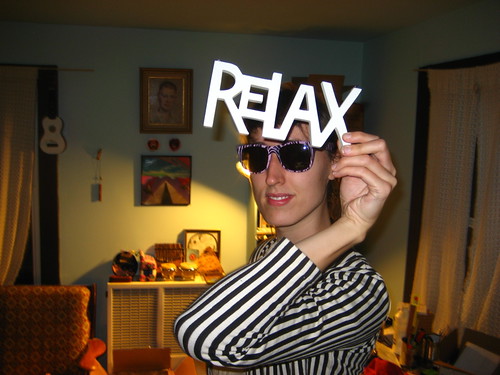
    relax
    photo by Lukey Dargons in Flickr

    martes, 12 de febrero de 2013

    Real English series: What do you do for fun?

    Two more video clips today in our Real English series, which is intended for Básico students.

    In the first clip people answer the question What do you do for fun?


    You can watch the same video with English subtitles on the Real English site.

    The second video is a follow-up to the one before. Passers-by answer two questions this time:
    What kind of music do you like?
    What kind of films do you like?


    You can also watch the same video with English subtitles on the Real English site.

    Students at an intermediate level will find two more challenging videos on the topic of free time and hobbies on the Real English site here and here. You will also be able to do some online activities by dropping past the Real English site.

    jueves, 6 de diciembre de 2012

    Northumberlandia: A face appears in the landscape

    Watch this short BBC news clip about a country park which will be opening next year in Northumberland and answer the questions about it. The activity is suitable for intermediate students.

    You can watch the clip by double clicking on the BBC link or on the picture below.


    1 What mineral is extracted from the mine where the park is being built?
    2 What makes the figure unique?
    3 What does the figure represent?
    4 Which two specific activities are mentioned that locals will be able to enjoy in the park?
    5 What's the main difficulty in building a figure this size?
    6 Five locals give their opinion of Northumberlandia. How many of them mention "The Angel of the North"?

    To check your answers you can read the transcript below.

    This near Cramlington in Northumberland is the largest open cast mine in the country. It’s expected to yield some five and a half million tons of coal. And this is Northumberlandia, created from the leftovers of the mine and carved here by the man who mined the coal. It’s the largest replica of a human body ever seen on the planet, of a reclining female form a quarter of a mile long. When the country park opens a year from now, there will be four miles of paths all over this figure with a number of lakes around its base.
    There's things which have been revealed about this project that even we, as part of the project team didn’t realize. In particular, the spectacular views that you can enjoy from the high points on it and the joy of exploring Northumberlandia by walking on the different paths and taking a different route each time you come here. So we think it’s going to be a really special place for people to come and enjoy.
    The landowners, Lord Ridley’s Blagdon Estates, are equally enthusiastic.
    We believe that it’ll draw people to Northumberland, we also believe it will be a great facility for the local people to enjoy, be it walking or just picnicking. From the Estates’ point of view to be able to leave a legacy like this is really quite a special occasion.
    From the curve of her hip to the nose and its cheek Northumberlandia mimics the undulating landscape around her. Her sheer size has surpassed even the expectations of the man brought in to design her, celebrated landscape artist Charles Jencks.
    It’s much bigger than I ever thought, and if you put anything in a big scale like this it disappears, you have to make a really bold gesture and accentuate, you know, exaggerate the lips, for instance. We are all attracted to the face. We have more neurons to identify other people than any other parts of our brain. So it’s the face that attracts you.
    "I like it, but I think people who didn’t know about wouldn’t have any idea what it was unless they knew about because it looks like a lump of shrawns."
    "Well I just said if you can see it from the air but it’s a lady-like, funny, no clothes on."
    "I kind of think it looks good on."
    "It’s like the angel of the north, isn’t it? It’s something that people (…), it’s something like… come and have a look."
    "We didn’t like the angel when it first went up, did we? And that was part of the north east."
    The north’s latest and biggest work of public art has perhaps done something to improve the image of open cast mining, and should be around for many generations to come. 
    Serena Shaggot BBC York North Cramlington.

    miércoles, 10 de octubre de 2012

    Talking point: How much time do you spend in nature?

    This week's talking point deals with nature, our attitude to nature and its importance in our lives. How much time do you spend in nature? was the topic in the Student Opinion section of The New York Times Learning Network back in September last year.

    What are your experiences in nature?
    As a child, did you use to go to summer camps or were you a member of youth organisations which promoted outdoor outings and activities like hiking or trekking?
    If so, did you enjoy them?
    How much time do you spend in nature these days?
    How do you feel about going on a camping holiday?
    Have you ever had an experience in which nature challenged or restored you?
    Have you ever been to a national park?
    Do you make a point of going to parks whenever you visit a city or town?
    Do you agree that children today are nature-deprived? Why or why not?
    Do you think young people need to play fewer video games and spend more time outside?

    In preparation for your discussion, you can read Nicholas D. Kristof's article for The New York Times "We’re Rich! (In Nature.)”.

    Ansel Adams/U.S. National Archives and Records Administration

    lunes, 27 de agosto de 2012

    Hong Kong series: What's your hobby?

    What’s your hobby?
    Can you tell us a bit about your hobby?
    Why do you like your hobby?

    These are the questions three teachers from The British Council in Hong Kong answer in today's videocast.

    The activity is suitable for strong Básico 1 students, and for Básico 2 and Intermediate 1 learners.

    Self-study activity:
    To develop your listening skills, just minimise the computer window and see if you understand the way the teachers answer the questions above.

    Then you can check the answers by watching the video in a normal way. Many of the phrases the speakers use are subtitled on the screen.

    Finally, you can practise your pronunciation by trying to say some of the phrases on the screen in the same way as the speaker has pronounced them.

    As a follow-up you can answer the questions on the video about yourself.

    martes, 10 de enero de 2012

    Speakout elementary: Going out

    Do you go out a lot?
    Did you go out last night?

    These are the two questions people on the street answer on the latest video clip installment of Speakout Elementary, Longman.

    Watch the video and note down the answers the speakers give.


    Now it's over to you. If possible, get together with an English-speaking friend or relative and answer the same questions about your social life. Try and use some of the expressions you heard on the video.

    You can read the transcript here.

    viernes, 25 de noviembre de 2011

    Active Parks

    Are there any parks around the area where you live?
    Are the parks popular?
    What activities do people usually do in these parks?
    What other activities could also be done or organised?

    Try to answer the questions above before visiting the website Active Parks, which I found out about through Jason Renshaw.


    In Active Parks you can check for yourself the way some Australian parks are organised to make life more pleasurable for citizens. This is the presentation message on the website:

    Think about your early childhood memories of family life.
    Chances are it involved a park or a beach or a bush walk. Did your family go on a camping trip or picnic in the bush? Do you remember riding a bike along a trail or learning to catch that big wave or even that big fish? What about climbing a tree or skimming stones across a river? It was good fun, wasn’t it?
    To encourage us all, a program has been developed to help Geelong get healthier, more active and connected to the great outdoors this Spring.
    And, it’s easier than you think with the new Geelong’s Active in Parks website. We have plenty of advice and tips on great locations and activities to plan things to do.

    Drop by Active Parks to develop your English reading skills and to find out more about what life in the Down Under is like as far as nature is concerned.

    martes, 8 de noviembre de 2011

    Speakout Upper-intermdiate: Downtime

    How do you spend your free time?
    How would you spend your free time differently if you had more time or money or opportunity?
    What are the benefits to society of giving people more downtime or more holidays?

    Watch another video from the Longman Speakout series and note down the way the interviewees answer the three questions above.


    You can read the transcript here.

    Now over to you. Get together with an English-speaking friend or relative and answer the questions for yourself.

    martes, 25 de octubre de 2011

    Speakout Pre-intermediate: Time out

    Watch this video from the Longman Speakout series and note down the answers people give to these two questions:

    What do you like doing in your free time?
    What are you going to do this weekend?


    Now answer the questions for yourself.

    You can read the transcript here.